How a Time Attendance System in Singapore Improves Workforce Productivity
Managing employee attendance seems simple until you have a 50-worker retail team spread across 3 businesses, reconciling timesheets every fortnight and still facing payroll errors at the end of the month.
This is a common scenario for thousands of Singapore businesses, and a time attendance system in Singapore is the solution.
This guide covers:
● What a time attendance system is and why it matters in Singapore
● How it improves workforce productivity at the ground level
● The advantages and disadvantages of investing in one
● The costs involved
● And how to choose the right one based on your team size and industry
What Is a Time Attendance System and Why Does It Matter in Singapore?
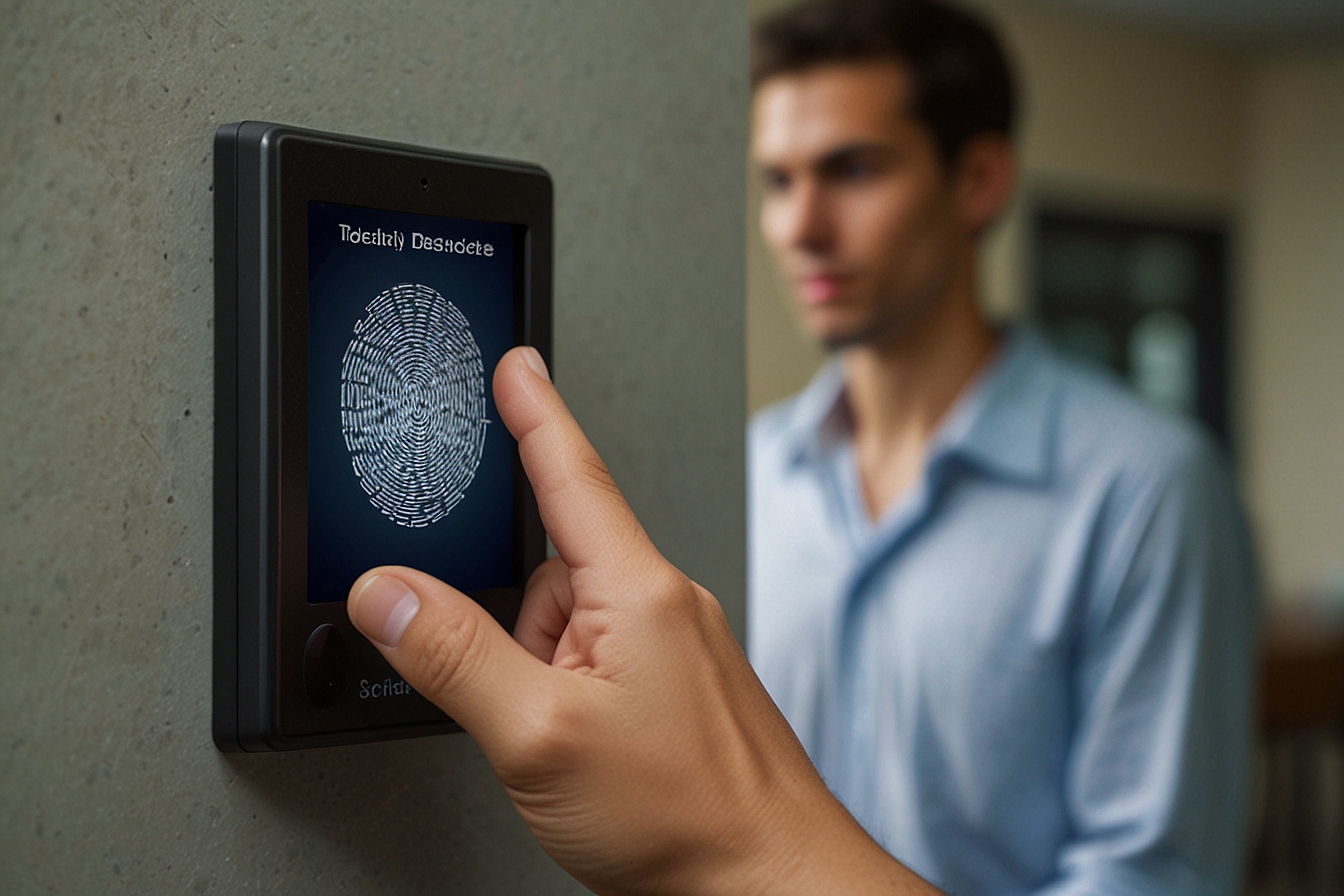
A time attendance system refers to software (typically partnered with biometric hardware or an RFID reader) that tracks employee clock in and clock out times. This data can be used for payroll calculation, overtime tracking, leave reconciliation and other workforce reporting.
In a Singapore context, this is crucial:
● The Employment Act stipulates guidelines for overtime calculation and working hour limits for non-managerial employees, which if misinterpreted can result in penalties from MOM
● Industries such as retail, F&B, and transport face challenges with shift-heavy workers
● And as companies scale to have multiple outlets, it becomes hard for the payroll team to keep track across multiple sheets
A time attendance system in Singapore alleviates all of these issues at once by providing an accurate digital log of employee time in and out that can be used for payroll data.
How Does a Time Attendance System Improve Workforce Productivity?
While most guides will give a superficial overview, here are the concrete ways a time attendance system improves workforce productivity in a business:
1. Eliminating time theft and buddy punching
By relying on biometrics or RFID cards instead of manual input, there is no possibility for employees to mark each other’s attendance. In businesses where hourly wages are the norm (retail, F&B, warehouse), this can add up to hours of lost productivity for a company with several employees.
2. Saves time on administrative tasks
Without a system to rely on, the payroll team has to manually note attendance, compare to shifts, calculate overtime and then compile everything into the payroll. With a connected time attendance system, the data can flow directly into the relevant payroll software, saving precious hours.
3. Visibility into your team’s attendance
A dashboard that displays attendance can help managers identify patterns early on (e.g. employees who consistently arrive late) instead of having to review timesheets every fortnight.
4. Better shift planning and scheduling
By identifying patterns (e.g. certain shifts that are regularly understaffed), you can make better decisions in future scheduling, rather than planning on a whim.
5. Minimises payroll errors and disputes
The majority of payroll disputes stem from disagreements over overtime. By relying on a time attendance system to calculate this, you remove the source of contention.
6. Can be used for remote or field workers
Some time attendance systems offer a mobile app that relies on GPS geofencing, meaning workers don’t have to be at a terminal to clock in.
Pros and Cons of a Time Attendance System
Before investing in a time attendance system for your business, it’s important to analyse the potential benefits and pitfalls.
Pros
● Reduces payroll errors for businesses that calculate wages according to the Employment Act
● Eliminates manual data entry of hours, allowing the payroll team more breathing space
● Improves compliance with working hour and overtime regulations
● Saves administrative hours — businesses that move from manual attendance to a connected system see a 4–8 hour reduction in administrative work per payroll cycle
● Easier to scale as the company grows — you don’t have to add administrative staff for every new branch you open
● Has an auditable trail in case of MOM or payroll disputes
● Can be relied on for full-time, part-time, shift workers and casual labour
Cons
● Upfront costs for hardware (biometric terminals, RFID reader)
● Can encounter pushback from employees (particularly older ones) during implementation
● Can be disrupted by technical issues (internet connectivity if it’s a cloud-based system, hardware malfunctions)
● If it isn’t integrated with a larger HRMS, still requires manual entry for payroll
● Can lead to over-reliance on attendance data for scheduling
Best Time Attendance System Singapore — Features to Look For
When choosing the best time attendance system in Singapore, keep in mind the following features.
Multi-factor authentication
Look for a system that allows your employees to clock in using multiple methods — fingerprint scan, facial recognition, RFID card, mobile app with GPS or web browser. The choice depends on your industry — a warehouse team may need to use biometrics, while a corporate office team may prefer a mobile or web interface.
Shift and roster planning
Make sure the system allows you to plan and schedule shifts easily. It should be able to accommodate rotating rosters and public holiday shifts.
Complies with Employment Act regulations
Make sure the system automatically calculates overtime in accordance with the Employment Act. This removes the risk of manual error.
Ability to accommodate part-time, casual and seasonal workers
Your system should allow you to create flexible hires that can be deployed to relevant shifts.
Dashboard and reporting
Having a dashboard showing attendance data will help you see patterns and take action.
Direct payroll integration
Ideally, your time attendance system should be able to directly connect to your payroll software, eliminating manual data entry and reducing the likelihood of errors.
Leave reconciliation
Leave approval should be able to sync with attendance, so approved leaves don’t show up as unauthorised absences.
Mobile accessibility for managers
Many Singapore small business owners are multi-outlet operators — a mobile-friendly interface will help them view and update attendance without being tied to a desktop.
Voyon Folks HRMS includes time attendance tracking as part of its core workforce management module, with attendance data flowing directly into payroll — no separate import step, no duplicate data entry. See how it works at www.voyonfolks.com.
Time Attendance System Singapore with Payroll Integration
One of the biggest issues businesses face when they start with a standalone attendance system is payroll processing. A time attendance system in Singapore with payroll integration eliminates the need to export and import data — here’s why that matters.
How a time attendance system with payroll integration works:
● Employees clock in and out using biometrics or mobile app
● System records hours worked, overtime, lateness
● At payroll date, these automatically sync with the payroll software, eliminating manual data entry
● Approved leaves are reconciled, so there are no discrepancies between attendance and leave records
Without payroll integration, you have to export the attendance report, check for errors manually, import it to payroll software, cross-reference leave records for approved and unpaid leaves, and then fix whatever discrepancies appear. It’s an extra step that costs time and is prone to errors — especially for multi-outlet businesses.
For SMEs in particular, time is of the essence and switching to a system that requires tedious data entry is not ideal.
Time Attendance System Singapore for Retail
Retail businesses in Singapore face unique challenges that general-purpose time attendance software isn’t built for.
Challenges specific to retail attendance management:
● Multi-outlet retail businesses need to manage attendance across outlets with varying shift patterns and opening hours
● High turnover means new staff will need to be added to the system frequently
● Most staff are part-time or on casual labour contracts
● Need to ensure overtime, especially on public holidays, is paid in accordance with the Employment Act
● Staff need to clock in at the outlet — not on a central server
The best time attendance system in Singapore for retail is one that can scale across multiple outlets while still giving each outlet manager real-time visibility into their own team’s attendance.
Time Attendance System Singapore for SMEs
SME owners considering a time attendance system often ask about the value it brings to smaller teams. Compared to larger corporations, SMEs have less budget and headcount to allocate to administrative software. However, a time attendance system offers a crucial productivity boost for SMEs:
● The time saved on payroll administrative tasks is significant, even for a team of 15
● Cloud-based time attendance systems have eliminated the need for expensive servers
● IMDA’s PSG scheme partially subsidises software costs for qualifying SMEs
● The administrative hours saved by switching from manual time tracking to a system can be more valuable for an SME with limited administrative staff
Voyon Folks is built to work for growing businesses — SMEs that need a full-featured system without the complexity or cost of enterprise-only platforms. Explore the platform at www.voyonfolks.com.
Time Attendance System Singapore Price
The time attendance system Singapore price varies depending on whether you select a standalone attendance software or one that comes with a larger HRMS, your headcount, and your clock-in requirements.
Standalone attendance software typically runs SGD 30–80 per month. These have limited payroll integration and may require you to manually export data to your payroll system.
Attendance as part of an SME HRMS ranges from SGD 80–250 per month depending on headcount and which modules are included — and this is where the best value sits for most Singapore businesses, since attendance, payroll, and leave management all work together in one system.
Enterprise HRMS with attendance is custom-priced for multi-location businesses with advanced reporting needs.
Biometric hardware is a one-time cost, typically SGD 300–800 per terminal for fingerprint or facial recognition devices.
Key considerations on pricing:
● PSG grant eligibility — if your business qualifies under IMDA’s criteria, you may be able to claim up to 50% of your software costs back
● Per-user vs flat-rate billing — some systems charge per user, others have a flat rate; if you have a growing team, ask about pricing structures before committing
● Hardware vs software-only — if your staff can use a mobile app to clock in, you can save on the cost of terminals entirely
● Integration costs — ask the vendor if payroll integration is part of the base cost or requires an additional module
Pros and Cons of Different Clock-In Methods
Biometric (fingerprint or facial recognition)
The most secure method — buddy punching is impossible and accuracy is very high. The trade-off is hardware cost and occasional employee discomfort around biometric data collection.
RFID card
Fast, low-cost cards that are easy to replace if lost. The risk is that cards can be shared between employees, which reintroduces the buddy-punching problem.
Mobile app with GPS
No hardware required and works well for field staff or multi-outlet teams who aren’t always at a fixed terminal. Relies on the employee’s smartphone battery and GPS accuracy.
Web browser
The lowest-cost option — works on any device with no hardware needed. Less secure than the other methods and easier to misuse without active monitoring.
It’s common for companies with a mix of corporate and field staff to use multiple clock-in methods rather than standardising on one across the board.
How to Choose the Right Time Attendance System for Your Business
Consider the following before making your decision:
What types of staff do you have?
Do you have full-time, part-time, shift, casual, remote or field workers? This will determine what clock-in methods are viable.
How many locations do you manage?
If it’s a multi-outlet business, you’ll need an attendance system that allows centralised reporting and either multiple terminals or a mobile-friendly interface.
Do you need it to integrate with your existing payroll software?
If yes, request a demo of how that integration works — ask for a specific walkthrough of how data flows from attendance into payroll, not just a yes/no answer.
Does your existing software already have attendance tracking?
Many businesses don’t realise that their existing HRMS has a time attendance module. If you’re considering a new system, make sure it’s actually necessary.
What is your implementation timeline?
Cloud-based systems are quicker to set up than ones that require hardware installation. Make sure you have time to implement it before your next payroll date.
What does your team need training on?
The most suitable time attendance system is one your team will adopt and use correctly from day one.
Conclusion
A time attendance system in Singapore not only solves the headache of tracking employee time, but also improves productivity and compliance with the Employment Act.
The difference between a standalone punch system and a comprehensive cloud-based HRMS with time attendance is the difference between addressing one symptom and treating the root cause.
Voyon Folks HRMS includes workforce time tracking, shift management and direct payroll integration. If you’re looking at time attendance systems in Singapore, it’s worth exploring the features: www.voyonfolks.com
This blog is for informational purposes. For Employment Act compliance specific to your business structure, consult MOM’s official guidelines or a registered HR consultant.
FAQ
What is the purpose of an attendance management system?
The primary purpose of an attendance management system is to accurately track, record, and automate the monitoring of employee or student work hours, attendance, tardiness, and leaves.
How does time and attendance software work?
Time and attendance software digitizes how businesses record employee working hours, breaks, leaves, and overtime, replacing paper timesheets and manual calculations.
Which technology is used for attendance monitoring?
Modern attendance monitoring uses biometric authentication, Radio Frequency Identification (RFID), GPS and geofencing, and AI-powered computer vision through platforms like Voyon Folks.
Which machine is used to track attendance of the employees?
Employers primarily use biometric attendance machines to track employee attendance.
How to get data from an attendance machine?
You can get data from an attendance or biometric machine using a USB flash drive, a direct network (LAN/Wi-Fi) connection, or desktop management software.