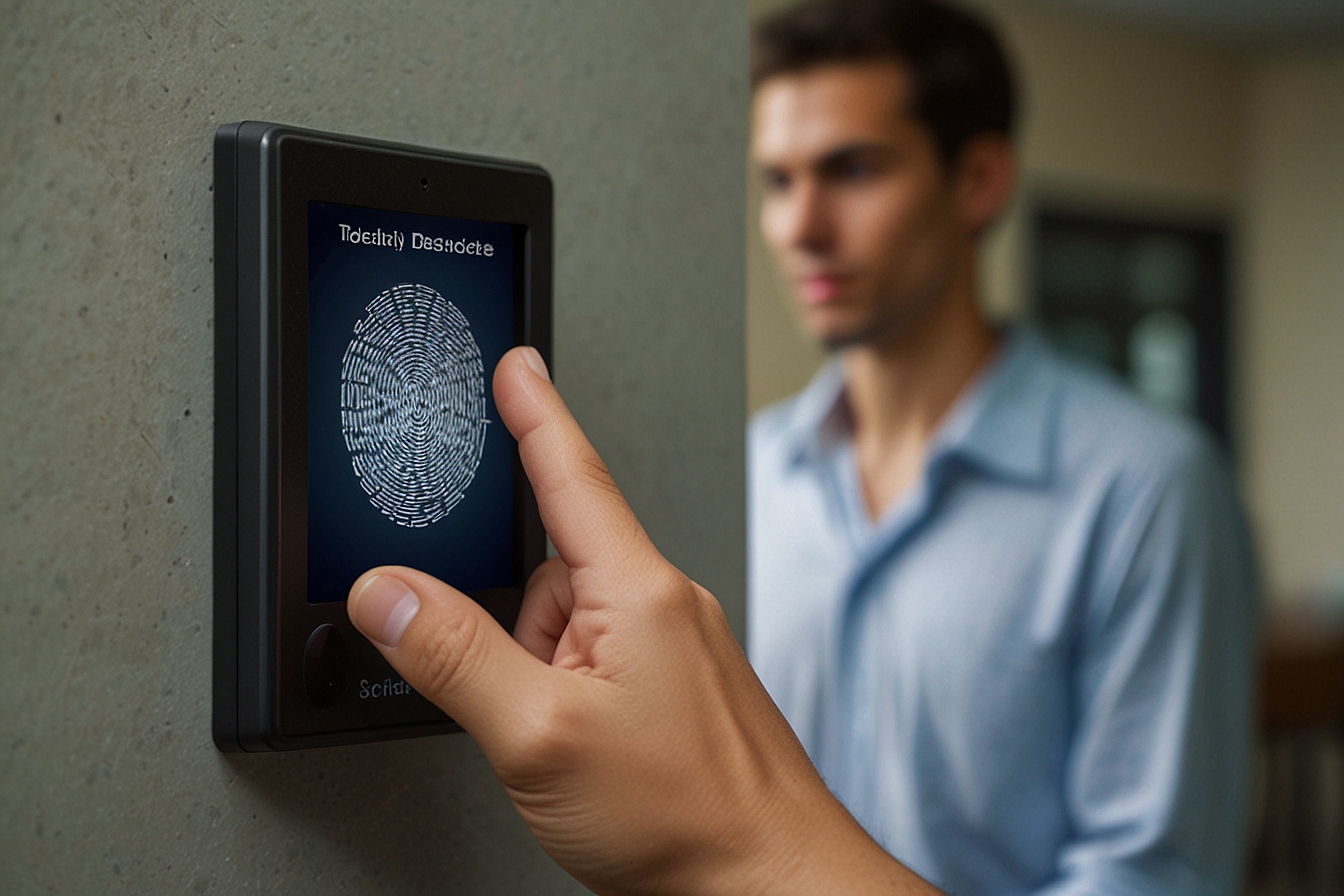
Employers around the world use biometric attendance software for the same reasons: it prevents buddy punching, auto-populates payrolls, and produces a verifiable audit trail compared to paper registers or timeclocks. For factory biometric attendance software that manages hundreds of shift workers per day, school biometric attendance software that handles complex administrative tasks, and enterprise biometric attendance software that spans hundreds of locations, the benefits are undeniable.
Until recently, governments around the world have been fine with this: take fingerprints, facial structure, and other measurements that identify a person as unique as a matter of course.
Not anymore.
Governments are classifying this type of biometric data as a special category of personal data that requires higher standards of protection than names, addresses, and employee numbers. You cannot simply change a password if someone has accessed your fingerprint database. It takes significantly more precautions to protect biometric data than other types of employee information.
This guide discusses the restrictions facing biometric attendance software, the most relevant and restrictive frameworks, the advantages and disadvantages of using such software, and the appropriate next steps for employers.
What Biometric Attendance Software Actually Captures
Before discussing the restrictions in any detail, it is important to understand what exactly biometric attendance software captures and how it might be classified.
Fingerprint biometric attendance software captures a mathematical representation of the ridges and furrows on your fingertip. These cannot be recreated from the mathematical representation in a properly-designed system, but the data itself is considered biometrics by most laws.
Face recognition biometric attendance software identifies key facial characteristics and creates a mathematical representation of the face. A face attendance system captures reference points on the face and stores it as a facial geometry template. Face recognition is the most heavily regulated form of biometrics worldwide because it captures data that does not require active consent from the subject the way fingerprint scans do.
GPS enabled biometric attendance software and mobile biometric attendance software both capture your location at the time of the scan, which in combination with your facial geometry or fingerprint creates what many governments consider a detailed profile of your physical presence at a specific location with specific purpose.
Why Countries Are Restricting Biometric Attendance Software
European Union: Consent Doesn't Work in Employment Contexts
Article 9 of the EU's General Data Protection Regulation classifies biometric data as a special category of personal data that requires a legal basis or freely-given consent before processing. This differs from most other jurisdictions because the European Data Protection Board has ruled that consent from employees is not freely-given in an employment context.
This means that while a company could use a consent form for face recognition biometric attendance software, fingerprint biometric attendance software, or any other form of biometrics, it should not rely upon it as a legal basis for processing. Employers should perform a GDPR-compliant Data Protection Impact Assessment (DPIA) before implementing any biometric attendance software, since the EU specifically prohibits processing of special categories of data unless it is strictly necessary.
Several EU countries, including Sweden, have already fined schools for using facial recognition attendance systems. Employers using real time biometric attendance software for continuous employee tracking face the most restrictions under the EU framework.
United States: BIPA and the Private Right of Action
Illinois has one of the most employee-friendly biometric privacy laws in the world: the Biometric Information Privacy Act (BIPA). Under BIPA, a company that wishes to use biometric data of any employee must:
● Provide a written notice of the use of the data
● Obtain written consent (which cannot be part of an employment contract)
● Publish a retention schedule for the data
● Ensure that the data cannot be sold or profited from
Violations of BIPA are private rights of action, which means employees can sue a company for $1,000 to $5,000 per violation, even if the employee cannot show a financial loss. Illinois employers should take BIPA seriously, since many class action lawsuits have exceeded $100 million in settlements. Similar laws exist in Texas, Washington, and at the federal level with the FTC.
India: DPDP Act and the Consent Gap
India's Digital Personal Data Protection Act (DPDP Act) of 2023 requires that an organisation only collect the personal data that it needs, use it for the purpose for which it was collected, and then delete it when it is done. Employees can request a copy of the data, correct it, or request deletion, and violations are reportable to the Data Protection Board of India.
The more important consideration for employers is the fact that the DPDP Act considers that when a biometric scan is made compulsory without a genuine choice, the consent of the employee is not freely-given, particularly in cases where employees are unable to take action such as when registration fails for reasons outside of their control. Indian employers using biometric attendance software should be prepared for the possibility that they may be ordered to provide a non-biometric alternative to employees.
India does not currently have specific laws relating to children and biometric data, which represents a risk to schools using fingerprint or face recognition biometric attendance software. Parents cannot give consent on behalf of children, and there are currently no published standards for retention or deletion of children's biometric data.
Australia: Employees Can Refuse and Cannot Be Penalised
Under Australia's Fair Work Commission, an employee cannot be forced to provide fingerprint data unless it is a reasonable and lawful part of the job. In Lee v Superior Wood, an employee was fired after refusing to provide fingerprint data for a new attendance system. The Fair Work Commission ruled that the employee was not fairly dismissed because the employer did not follow privacy laws relating to the collection of sensitive information. Employees can now refuse to provide biometric data and cannot be penalised for doing so.
This ruling applies to any Australian employer considering best biometric attendance software, as it establishes that they cannot compel employees to use such a system.
UAE and GCC: PDPL and Emerging Frameworks
The UAE's Personal Data Protection Law (Federal Decree-Law No. 45 of 2021) protects sensitive personal data, which includes biometrics. Employers using affordable biometric attendance software or multi location biometric attendance software should be aware that the PDPL requires that the collection of such data be done with the explicit consent of the employee and adequate security measures. Employers should have procedures in place for how the data will be used and for how long it will be retained before deletion. The overall trend in the GCC is similar to that of the EU and the U.S.: biometric data is considered sensitive and requires higher levels of protection than typical employee data.
Advantages of Biometric Attendance Software
Biometric attendance software provides many advantages for the employer that uses it appropriately.
Prevents time theft and buddy punching
Fingerprint biometric attendance software and face recognition biometric attendance software both require the presence of the actual employee. This is particularly important for factory biometric attendance software where operators may share computers to clock in and out.
Greater accuracy at scale
The software is generally more accurate than manual registers, web clocks, or card readers in a large enterprise biometric attendance software deployment of hundreds or thousands of employees.
Real-time workforce visibility
Real time biometric attendance software can provide real time updates to HR managers regarding employee attendance.
Offline data capture
Offline biometric attendance software can store data about employee attendance when there is no internet connection and sync when connectivity resumes. This is useful in factory situations where there may be no reliable internet connection.
AI-powered pattern detection
AI powered biometric attendance software can flag irregularities in employee attendance patterns, such as showing up at a different location than usual or patterns that suggest leave abuse. With the addition of AI, biometric attendance software transforms from a simple recordkeeping tool into a powerful management tool.
Hygiene-friendly for regulated industries
Contactless biometric attendance software can help employers comply with hygiene rules, as face recognition does not require touching a shared surface the way fingerprint recognition does. This is particularly important in healthcare, food production, and other industries that have adopted touchless work rules as a result of COVID-19.
Disadvantages of Biometric Attendance Software
Biometric data cannot be replaced if compromised
A password can be changed if it is compromised, but a fingerprint cannot. This is the main reason that biometric data is considered sensitive information: once it is exposed, the employee has no way of protecting themselves. This is a particular concern in the case of a data breach that exposes the templates of an entire company's worth of employees.
Consent is problematic in employment contexts
Multiple regulators in the EU, Australia, and India have taken action against employers for using biometric data without employee consent or with consent obtained through coercion. Best biometric attendance software includes a non-biometric alternative for employees who cannot or will not provide biometric data on religious, medical, or other grounds.
Device failure creates data gaps
If the device fails at a crucial moment, the system will not capture employee data until the device is repaired or replaced. This is a particular concern for offline biometric attendance software that stores data locally before syncing with the main database. Employers using multi location biometric attendance software have more points of potential failure.
Accuracy limitations in face recognition
Face recognition is less accurate than fingerprint recognition software in low light conditions, when the subject is wearing glasses or a face covering, or when there is an obstruction or smudge on the lens of the camera. Some courts have ruled that failures in face recognition technology that result in employees being unable to use the system should be compensated and that alternative methods should be offered to affected employees.
Regulatory environment is tightening
The regulatory environment for biometric data is likely to become more restrictive in the near future as governments take steps to protect personal data. Employers that adopt best biometric attendance software today without proper safeguards will find themselves in a weaker position as regulations change. It is much less expensive and disruptive to build appropriate protections into the software from the beginning than it is to retrofit older systems.
What Employers Need to Do Before Deploying Biometric Attendance Software
All employers, regardless of size or location, should take the following steps before implementing biometric attendance software.
Document a lawful basis
Decide on and document a lawful basis for using biometric attendance software. In most cases, this will not be consent, even though it is often used as a method of obtaining permission from employees. Other options include necessity or legitimate interest, provided appropriate safeguards are in place.
Perform a Data Protection Impact Assessment
Perform a DPIA to determine what employee data will be collected, where it will be stored, who will have access to it, how long it will be retained, and what measures will be taken to delete the data upon termination of employment.
Provide an alternative attendance method
Provide an alternative method of attendance for employees who decline the use of biometric data for documented religious, medical, or other reasons.
Document a data deletion procedure
Document a procedure for deleting employee data from your systems after a specified period of time. Based on guidelines in India, it is recommended that biometric data be deleted between 60 and 90 days after termination of employment, depending on your payroll and audit needs. Make sure that your cloud based biometric attendance software or HRMS platform has the capability to automatically delete employee data after the specified period.
Encrypt biometric templates
If using GPS enabled biometric attendance software or face recognition biometric attendance software, make sure that the mathematical representation of the geometry of the face is encrypted. Do not store images of faces or fingerprints in your system. Ask your vendor to confirm that they store only encrypted mathematical representations of biometric data.
Review vendor contracts
Review vendor contracts to make sure that they do not violate any personal data protection laws and that they have appropriate safeguards in place to protect employee data.
Voyon Folks HRMS supports cloud based biometric attendance software as part of our larger HRMS solution. We specialise in working with clients in the UAE, GCC countries, and South East Asia to make sure that we are following local laws and regulations. More information is available at www.voyonfolks.com.
Conclusion: Biometric Attendance Software Is Not Going Away. The Rules Around It Are Changing.
Biometric attendance software is perfectly usable within the bounds of the law if implemented correctly, although employers need to take specific steps to make sure they are following the rules. Face recognition biometric attendance software, fingerprint biometric attendance software, GPS enabled biometric attendance software, and other technologies that fall under the umbrella term of biometrics can all be used to track employee attendance, provided appropriate safeguards are in place.
Employers that use such software without regard for employee privacy, without documented consent, without appropriate encryption and storage measures, and without alternative methods of attendance for employees who decline will find themselves on the wrong end of a class-action lawsuit in the coming years. The easiest way to avoid this is to choose cloud based biometric attendance software and AI powered biometric attendance software from a vendor that takes employee privacy seriously and that has appropriate measures in place to protect employee data.
Faq
Why are people against biometrics?
People are against biometrics because the data is permanent, creates severe privacy risks, and can be misused for mass surveillance.
Is biometric attendance compulsory?
Biometric attendance is not compulsory under a single national law, but it is heavily mandated by specific government departments, state orders, and institutional rules.
What are the top 10 biometric attendance companies in India?
The top biometric attendance and access control companies in India include leading hardware manufacturers and software integrators known for AI facial recognition, fingerprint scanning, and cloud-based payroll synchronization.
How much does a biometric attendance system device cost?
The cost of a biometric attendance system device typically ranges from $35 to $350+ USD (or ₹3,500 to ₹30,000+ INR in India) for a standalone commercial machine. The final price depends primarily on the scanning technology (fingerprint vs. facial recognition), user capacity, and connectivity features
Which software is used in a biometric attendance system?
A biometric attendance system uses a combination of low-level device firmware, core biometric recognition engines, and high-level attendance management or HRMS Software to capture, process, and log employee check-ins
What is the Aadhaar-based biometric attendance system?
The Aadhaar Enabled Biometric Attendance System (AEBAS) is a real-time, cloud-based platform used by Indian government organizations to track employee attendance through Aadhaar biometric authentication.
ABOUT THE AUTHOR
This article is written by an HRMS professional with over 4 years of experience in payroll systems, HR technology consulting, and implementation support. The insights shared are based on real-world exposure to payroll automation, compliance challenges, and workforce management solutions across multiple business environments.