When Attendance Data Is Wrong, Everything Else Goes Wrong
Payroll errors, compliance gaps, workforce planning issues in Indian businesses, all begin with one data source: attendance. Whether it is time logged by a field employee that never made it to payroll, a shift swap processed incorrectly by a manager, or manual deductions of leaves by finance, wrong data at the source creates cascading problems.
For firms with a dispersed presence across the country, dealing with remote, on-site, factory, and hybrid employees, attendance management software is critical to ensuring accurate payroll, labor law compliance, and workforce insights.
This guide focuses on what Indian decision-makers evaluating attendance systems should know in 2026.
What Attendance Management Software Does
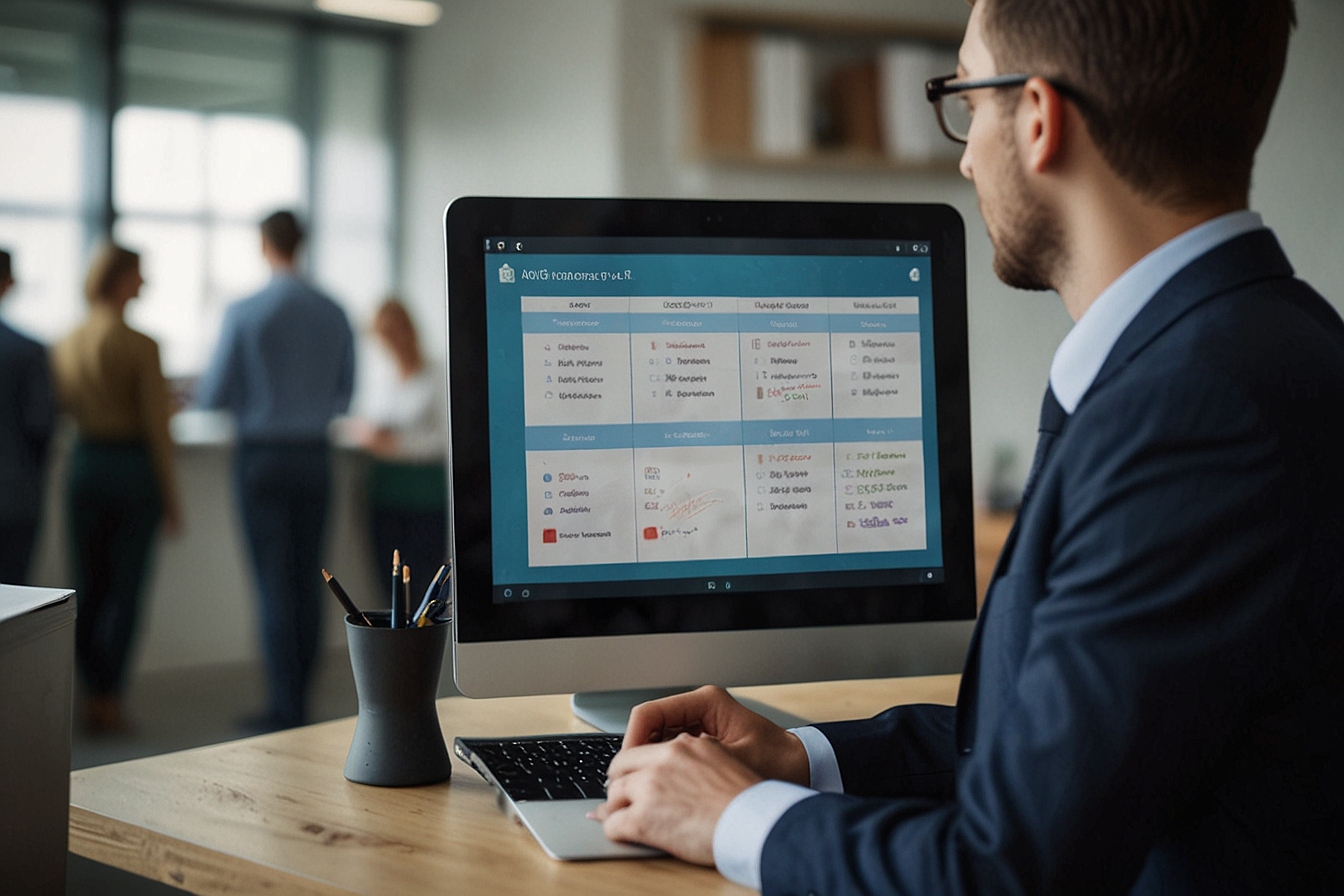
Attendance Management Software (AMS) is used to record employee time and attendance data, and process it for payroll, workforce analytics, and compliance reporting. AMS replaces time-consuming and error-prone manual recording of attendance, and provides deeper analytical and reporting capabilities than disconnected spreadsheets and biometric machines.
Modern attendance management systems provide multiple benefits, including:
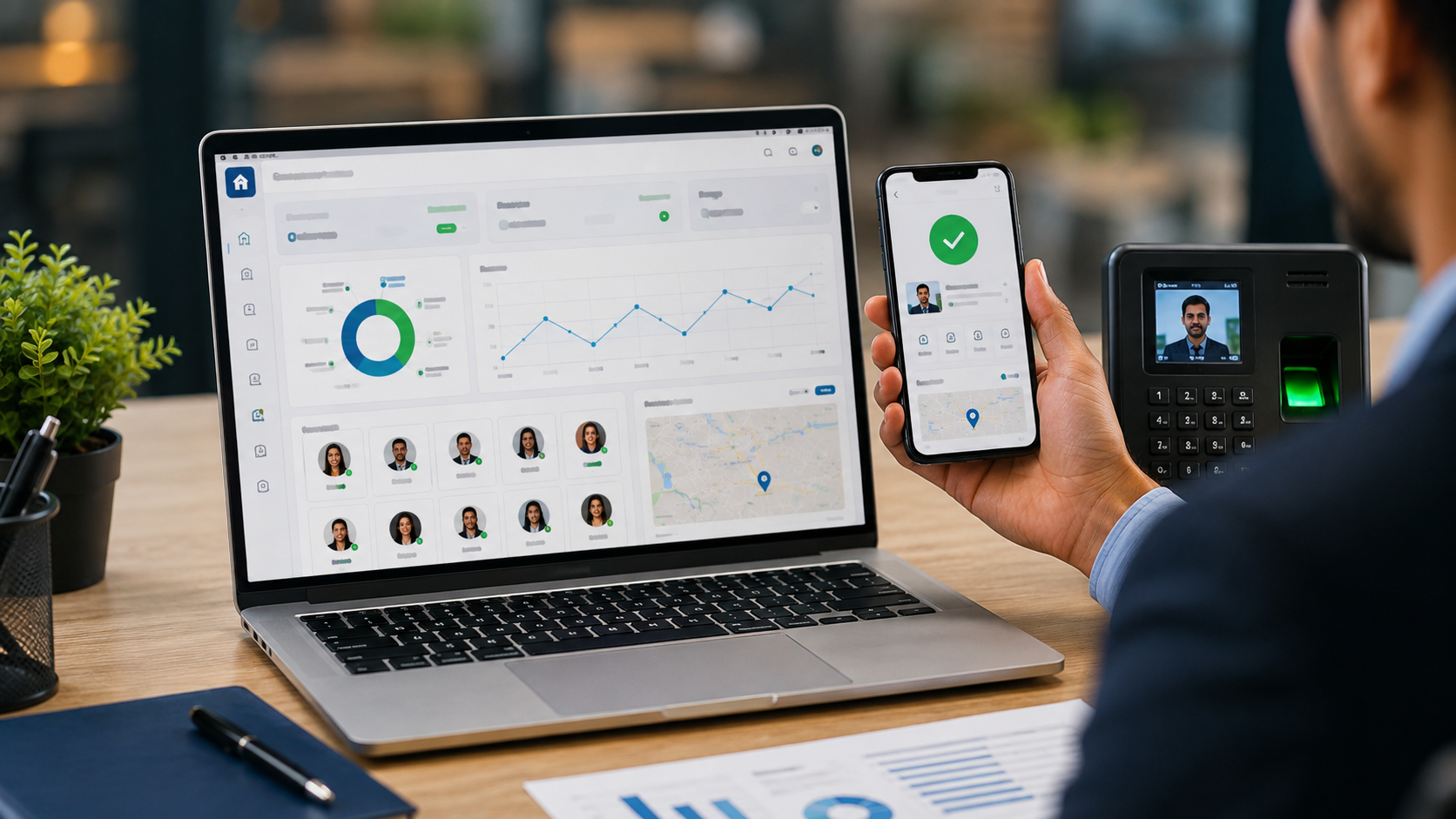
- Attendance recording: Employees can log their time and attendance via biometrics, web and mobile apps, RFID, or other connected devices
- Leave and shift tracking: Leaves and shifts can be recorded, approved, and tracked against company policies
- Payroll-ready reports: Reports on attendance, leaves, and working hours are produced in payroll-friendly formats for seamless processing. Hours worked per employee are accurately captured for payroll software
- Compliance and audit trails: Maintains a complete audit trail of attendance data for statutory and internal compliance purposes. Anomalies such as buddy punching can be identified and investigated
At the most basic level, an AMS performs the following key functions:
- Record employee check-ins and check-outs digitally
- Track leaves, shifts, overtime, and other attendance data against company policy
- Ensure accurate processing of working hours for payroll and compliance
- Provide analytics and reporting on attendance trends and patterns
- Maintain audit trails of attendance data for statutory and internal compliance
The value of attendance management software extends beyond just capturing employee attendance data digitally.
In an ideal scenario, the data captured by an AMS is used directly by payroll to calculate wages, bonuses, overtime, and deductions, minimizing the scope for errors.
However, if the attendance management system requires data to be exported into Excel or another program before reaching payroll, it creates an opportunity for mistakes.
Why Attendance Management Poses Unique Challenges in India
Indian firms have some unique considerations when it comes to attendance management systems:
- Multisite operations: Indian firms often have operations spanning multiple locations within the country, and sometimes internationally. Managing attendance across different shifts in different sites can be complicated.
- Large contract and field workforce: Many Indian businesses have large numbers of field and contract workers who need to log their attendance via mobile-friendly means.
- Variations in labor laws: Indian labor laws vary from state to state. An AMS must handle varying shifts, working hours, overtime rules, and holidays across different states and locations.
- Payroll compliance requirements: Deductions for provident fund, ESI, and other statutory requirements are calculated based on attendance, shifts, and working hours. Payroll accuracy is closely linked to attendance management.
- Shift work: Indian firms in manufacturing or BPO sectors often have shift-based employees working in rotating shifts, with variations in night shifts and weekly offs.
These are some of the factors that Indian firms should consider while selecting an AMS.
Key Features to Look for in Attendance Software in 2026
Not all attendance management systems are the same. While some focus on large enterprises, others are more suited to small businesses. Here are some of the most important features Indian firms should look out for:
Attendance capture options
Look for an AMS that offers multiple attendance capture options, including biometrics, web and mobile apps, and RFID. Offline mode is necessary for users in remote areas with spotty internet connectivity.
Shift and policy configuration
An AMS must be able to configure shift patterns, overtime rules, and working hours according to state and site-specific policies.
Leave management
Ideally, an AMS should be able to track leave balances, and process leaves according to company policy. Leave approvals should be possible through mobile and web apps.
Payroll and compliance
The AMS should be able to configure payroll-related rules, such as overtime calculations, and statutory deductions for provident fund, ESI, and professional tax.
Reporting and analytics
An AMS should offer robust reporting and analytics features. These include dashboards showing attendance trends, leaves taken and pending, and reports on attendance by employee, team, or site. Anomaly detection helps identify issues such as buddy punching.
Some of the Best Attendance Management Systems in India
Darwinbox
A comprehensive enterprise-grade solution for large-scale organizations with dispersed workforces. Darwinbox offers a powerful yet intuitive interface, and combines workforce management and attendance analytics in one platform. Best suited for large enterprises looking to unify their workforce management needs in one platform.
Voyon Folks HRMS
Voyon Folks HRMS is designed for businesses that operate across the UAE, Gulf, South Asia, and Southeast Asia, including India. Attendance tracking is just one part of a larger unified platform that handles workforce management, HR, and payroll needs for firms operating across multiple jurisdictions. Best suited for organizations with complex compliance requirements across multiple countries, that want to simplify operations by adopting a unified platform.
Keka
A powerful HR tech platform with strong attendance and payroll features. Keka offers extensive configuration options, and seamless integration with other productivity tools. Best suited for growing employee-centric organizations that want to build a strong relationship with their workforce.
GreytHR
A simple yet powerful attendance management system that focuses on ease of use. GreytHR is easy to configure, and offers extensive reports and analytics. Best suited for small and medium enterprises that want a fully fledged attendance and payroll solution that can scale with them.
FactoHR
An affordable yet powerful attendance management system that offers biometric and facial recognition options. FactoHR has options for managing field staff, and has strong payroll integration. Best suited for small and medium-sized businesses that want a cost-effective solution for managing attendance for their field staff, with strong payroll features.
Zoho People
Zoho People offers strong attendance features that integrate seamlessly with the larger Zoho suite. For organizations that use other Zoho products, Zoho People offers a frictionless way to manage attendance. Best suited for businesses that use Zoho applications and want seamless integration across products.
Pocket HRMS
A cloud-based attendance management system with powerful AI-enabled features. Attendance management in Pocket HRMS is streamlined through the use of an AI chatbot that can answer common employee queries. Best suited for mid-sized businesses that want to adopt AI-powered HR solutions.
How Attendance Is Linked to Payroll
The most important consideration when choosing an attendance management system is whether it can be linked to other systems, particularly payroll.
If the attendance management system is used in isolation, it creates extra work for HR and finance teams, and increases the risk of errors.
In an ideal setup, the AMS is used to directly calculate payroll payments and deductions.
There are two basic ways in which an AMS can be used:
- Standalone: Attendance data captured by the system needs to be manually exported and imported into the payroll system. This increases the risk of errors, since there are multiple steps involved.
- Integrated: In this setup, the AMS is connected to a larger HRIS (Human Resource Information System), which in turn is connected to payroll. This removes the need for manual data entry or export, which speeds up processing and reduces errors.
For organizations in India that follow a monthly payroll cycle, integrated attendance management is a must.
What AI Brings to Attendance Management
AI-powered systems have brought several new capabilities to attendance management systems, including:
- Facial recognition with spoof detection: AI enables attendance management systems to use facial recognition to capture attendance, while also preventing spoofing attempts.
- Anomaly detection: AI can be used to identify suspicious patterns in attendance data, such as employees clocking in early or leaving late every day.
- Predictive analytics: By analyzing employee attendance data, AI can predict future trends, such as an increase in absences.
- Automated processing with configurable rules: Most AMS users do not want every attendance-related request to go to HR for approval. With AI, attendance management systems can use predefined rules to automatically approve or reject requests, instead of HR having to process each one individually.
How to Choose the Right Attendance Management System
Here are some factors that should be considered when selecting an attendance management system:
- Scalability: Will the system be able to handle your current and future attendance management needs?
- Payroll and HRIS integration: Can the system connect to other software, or will it be a standalone application?
- Capture methods: Does it support the attendance capture methods relevant to your organization? You may need multiple capture options if you have a combination of office, factory, and field employees.
- Compliance: Does the solution support Indian labor laws and statutory requirements?
- Reporting: Will the system provide the reports and dashboards that you need?
- Implementation: How long will it take to implement the system? Does the vendor offer local support?
Conclusion: Attendance Infrastructure Forms the Backbone of Accurate Payroll in India
A majority of errors in Indian payroll processing stem from incorrect attendance data. These errors result from the time-consuming and error-prone manual process of capturing attendance. Attendance management software eliminates this step, and automates reporting, payroll calculations, and compliance management.
As a result, Indian firms looking to optimize their payroll processes should invest in a comprehensive attendance management system that can scale with their needs, connects to other software, and provides powerful analytics without requiring additional effort. In 2026, Indian organizations should prioritize attendance management systems that offer web and mobile-based attendance capture, powerful analytics, shift management features, and seamless payroll integration when choosing an attendance management system.
Frequently Asked Questions
1. What is attendance management software and why do Indian businesses need it?
Attendance management software automates the recording of employee attendance data. Attendance management solutions are crucial for organizations because they eliminate the need for time-consuming and error-prone manual recording of attendance data. Attendance data is also a vital input for payroll calculations, and an AMS reduces errors in payroll processing. Most importantly, an AMS provides reporting and analytics features that would be difficult or impossible to achieve with manual processes.
2. How does an attendance management system integrate with payroll software?
In an integrated system, attendance data captured by the AMS is directly fed into the payroll system, removing the need for manual data entry. This dramatically reduces the risk of errors, since automated data transfer is more reliable than manual methods.
3. What attendance capture methods should Indian businesses look for?
Indian businesses should look for attendance management systems that offer multiple attendance capture methods, including biometrics for office and factory staff, web and mobile-based capture for remote workers, and GPS geo-fencing for employees working outside the office. Offline mode is also crucial for remote workers.
4. How does an attendance system handle India's state-specific labor law requirements?
A robust attendance management system should allow you to configure shift rules, attendance rules, and holiday calendars for different states and work sites. This lets you follow the labor law requirements for each state that you operate in, instead of using the same configuration for all employees.
5. What is the difference between a standalone attendance system and an integrated HRIS platform?
A standalone attendance management system only handles attendance data recording and reporting functions. An integrated HRIS platform connects attendance, leave, and payroll modules, so that data only needs to be entered once and flows between modules automatically. While a standalone system may be sufficient for small businesses, an integrated platform is better for larger organizations, or for businesses that want to minimize the risk of errors.
About the Author
HR technology and workforce operations specialist with experience advising India-based companies on HRMS implementation, attendance automation, and integrated payroll compliance across multi-site and distributed workforce structures.